
Host a shared coloring session without competition
Make room for individual pages, optional advice, shared supplies, and different finishing times at your coloring table.
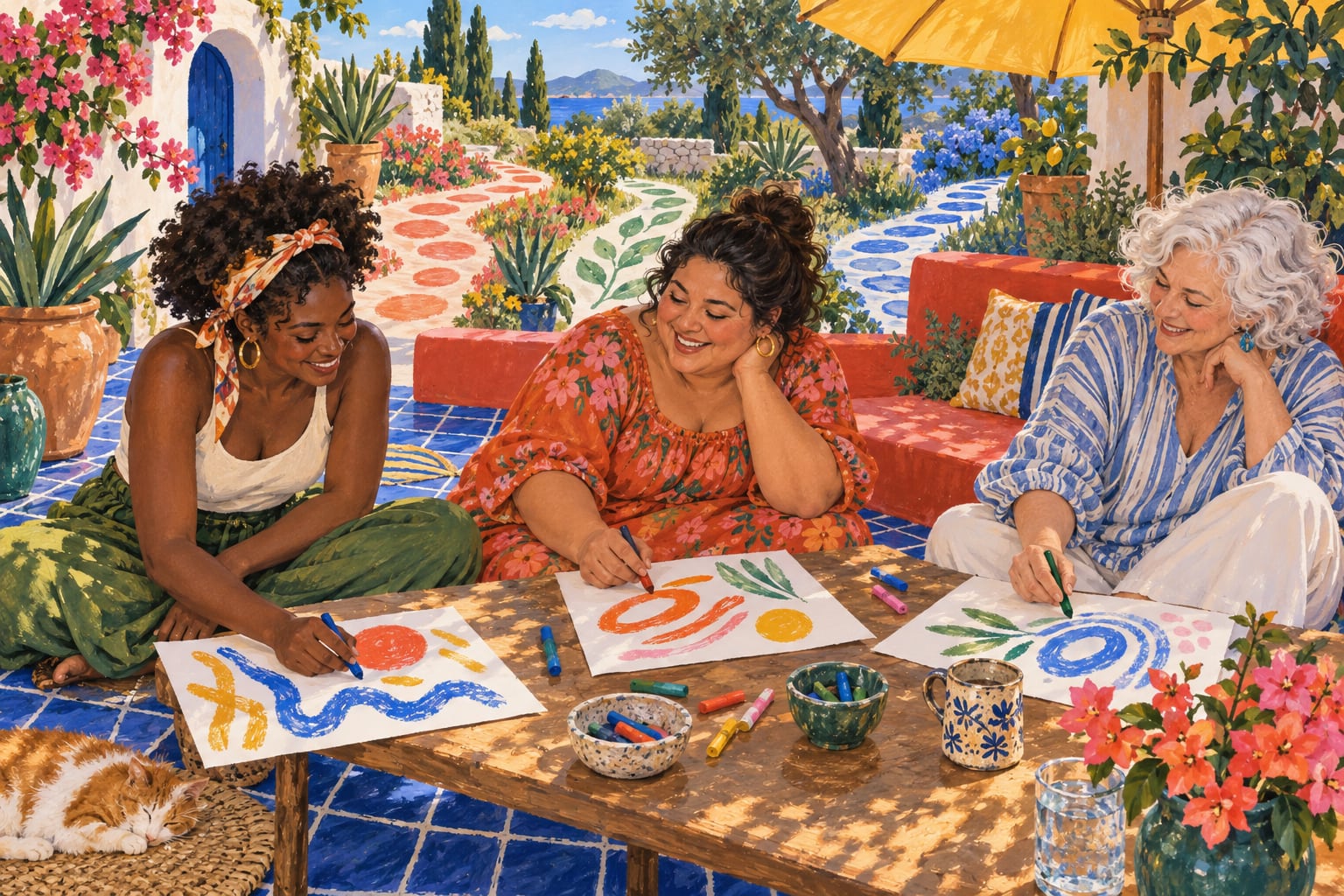
For a shared coloring session, agree on how to use the supplies and let everyone choose their picture, pace, and level of help. You do not need to finish together or work on matching illustrations. An afternoon can feel connected even when every finished page looks different.
The most useful preparation often happens before the pencils come out: explain the kind of gathering you have in mind. “Bring a page you feel like coloring; we can chat or work quietly” leaves more room than announcing an afternoon dedicated to making a perfect picture.
Set up a table with room for choice
Keep shared supplies within reach and leave a personal working area for each participant. Separate personal pencils from materials available to borrow. If there is only one sharpener, agree on where it belongs after use. Asking before taking something avoids interrupting another person's decision.
Everyone can bring their own book or a drawing they made. You do not need identical copies. You could also suggest an open theme, such as “a touch of orange,” that works across very different pictures. Following that theme should remain optional.
A simple way to begin
- If you feel like it, show the area you plan to start with. Nobody needs to justify their choice.
- Decide whether to play music and at what volume, keeping conversation comfortable.
- Agree to ask before giving advice or touching someone else's page.
- Keep separate paper available for demonstrating a mixture when someone requests help.
- Choose an approximate time to pack up without turning it into a deadline for finishing the artwork.
When someone asks for an opinion
Imagine a friend asks whether her sky needs more blue. A useful response could be, “Would you like the sky or the house to stand out?” Then suggest an option she can test on separate paper. That keeps the conversation connected to her intention and leaves the decision with her.
If advice has not been requested, mention something you actually notice: “You used that green again in the windows.” It shows interest without giving the picture a grade. Avoid turning every observation into a lesson or using a pause as an opportunity to correct details.
Common stumbling blocks
- Choosing a complicated picture for everyone: allow different pages and sizes.
- Comparing how much people have finished: one detailed corner can take a whole session.
- Giving constant instructions: first ask whether the other person would like ideas.
- Assuming silence means boredom: spending time together does not require continuous conversation.
A common question
What if someone finishes early?
They can put their picture away, explore colors on their own spare paper, or keep chatting. They do not have to begin another drawing while they wait. Anyone still coloring can continue at their own pace. When you pack up, each person chooses whether to show their work.
For another gathering, explore the Chroma Shu book collection individually and choose different worlds. This shared-session exercise is an editorial suggestion from Equipo Chroma Shu; adapt the agreements to the people around your table.



Be the first person to leave a little trace of color here.