
A Screen-Free Creative Pause After Work
A short transition with paper, color and very few choices can mark the end of the workday without turning rest into another task.
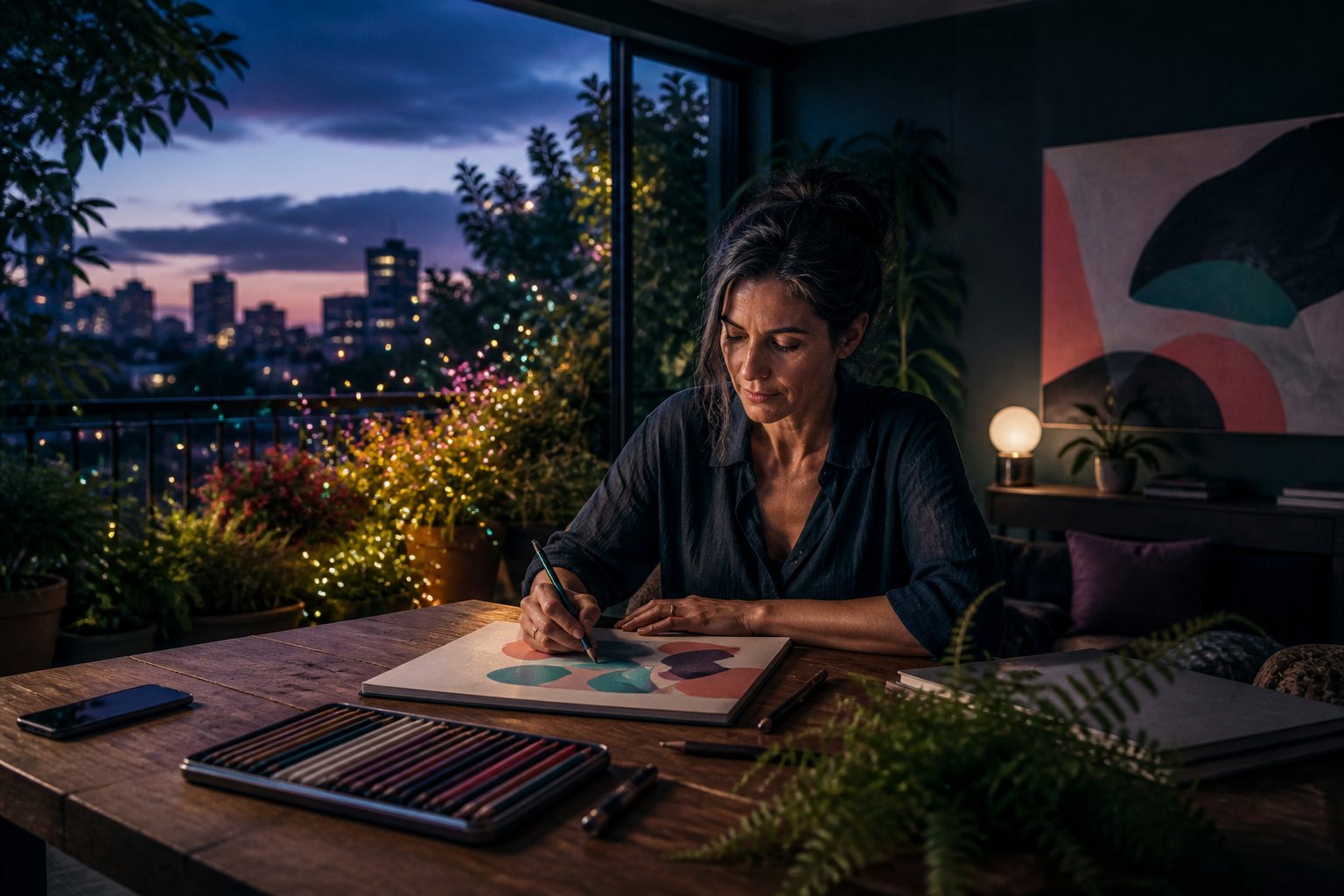
Short answer: A short transition with paper, color and very few choices can mark the end of the workday without turning rest into another task.
After many hours in front of a screen, it is easy to open another screen out of habit. A hands-on activity creates a visible shift: attention moves from notifications and windows to one tangible page.
This is not a medical promise
Coloring does not replace sleep, treatment or professional support. It can simply be a pleasant way to separate two parts of the day. The useful part is keeping the pause optional, small and free from required outcomes.
A fifteen-minute transition
- Place your phone out of reach or face down.
- Choose the page and three colors before sitting down.
- Color one repeating area or border.
- Stop when the time is up, even if the page remains open.
- Put materials away ready for another day.
If coloring does not appeal today, the pause can be sorting pencils, listening to one song or simply looking through a page. Coloring gives you permission to disconnect, and that permission includes choosing how and for how long.
Practical example: close the laptop and open one page
At the end of the workday, leave one book, three pencils and a protective sheet ready. Play one short piece of music or set a quiet fifteen-minute timer. Color a border or repeating shape without deciding the entire palette. When the time ends, put the tools away even if you would like to continue; that unfinished energy can make it easier to return without turning the activity into a long obligation.
Common mistakes when designing the pause
- Using it to complete another goal: finishing a page is not the purpose.
- Preparing too much: searching through twenty materials consumes the transition.
- Measuring success through productivity: changing pace for a few minutes is enough.
Match the ritual to your actual energy
On tired days, choose broad areas or simply test two colors. When you have more energy, continue a detailed page. If you need a screen for music, start playback and place the device out of reach. The pause should adapt to you, not the other way around.
A closing cue: place a bookmark beside the next area and keep three colors together. That small gesture preserves the thread of the page and prevents the next session from beginning with a long search.
Frequently asked question
Does it have to happen immediately after work?
No. Choose any moment that clearly feels like a transition: when you get home, after dinner or before starting another activity.
Be the first person to leave a little trace of color here.